The 2026 “State of AI Adoption in Organizations” survey, conducted at HPT D-DAY 2026, found that 58% of respondents identified data security and AI ethics as the biggest challenges to adopting AI. This was the most frequently cited challenge, followed by a shortage of AI talent (52%) and the cost of AI initiatives and difficulty determining return on investment (ROI) (48%). These findings show that AI adoption is about more than technology. To realize meaningful value from AI, organizations must also address strategy, data, people, risk management, and their ability to translate AI initiatives into tangible business outcomes.
The 2026 “State of AI Adoption in Organizations” survey
The 2026 “State of AI Adoption in Organizations” survey was conducted by HPT in collaboration with the Ho Chi Minh City Computer Association (HCA) and Mr. Dao Trung Thanh, IT and AI Strategy Consultant. The findings were presented at HPT D-DAY 2026. The survey is intended to provide businesses and organizations with a practical reference framework for assessing their AI maturity, understanding where they stand in their digital transformation journey, and identifying priorities for the next stage. The report also aims to build a reference data resource for the business community, regulatory bodies, and organizations supporting digital transformation, helping promote effective, practical AI adoption that delivers sustainable business value.
Mr. Dinh Ha Duy Linh, Vice-Chairman, CEO, HPT Vietnam Corporation, shares insights into the AI survey findings
Assessing AI maturity with the V-STAR model
One of the key features of the 2026 survey is its focus on the AI maturity of each business or organization, assessed through a model comprising five capability domains and five maturity levels.
The five capability domains of the V-STAR model
• S – Strategy & Leadership: assesses the leadership’s ability to set direction, demonstrate commitment, and drive AI adoption across the organization.
• T – Technology, Data & AI Operations: assesses the readiness of the technology and data foundations, as well as the organization’s ability to deploy and operate AI solutions.
• A – Human Resources & Operating Model: assesses workforce capabilities, readiness for change, and the organization’s ability to mobilize resources for practical AI adoption.
• R – Risk & Responsible AI Governance: assesses the ability to manage risk, ensure compliance and transparency, and use AI responsibly.
• V – Value Realization, Usage & Scaling: assesses the ability to translate AI initiatives into tangible outcomes, embed AI into day-to-day operations, and scale AI capabilities across the organization.
The Five Levels of organizational AI maturity
AI maturity is classified into five levels:
• Level 1 (L1): Emerging
• Level 2 (L2): Developing
• Level 3 (L3): Standardized
• Level 4 (L4): Transformative
• Level 5 (L5): Pioneering
The survey also includes in-depth analysis of AI adoption objectives, implementation status, challenges, data governance practices, and related compliance issues within organizations.
What sets the 2026 AI survey apart
Unlike many market surveys that primarily describe trends or provide a broad overview of an economy, industry, or business community, the 2026 “State of AI Adoption in Organizations” survey is designed to assess each organization’s AI capabilities and maturity against a consistent framework. This approach does more than identify the current state of AI adoption. It also helps organizations understand their strengths, capability gaps, and improvement priorities in line with their specific circumstances and business objectives.
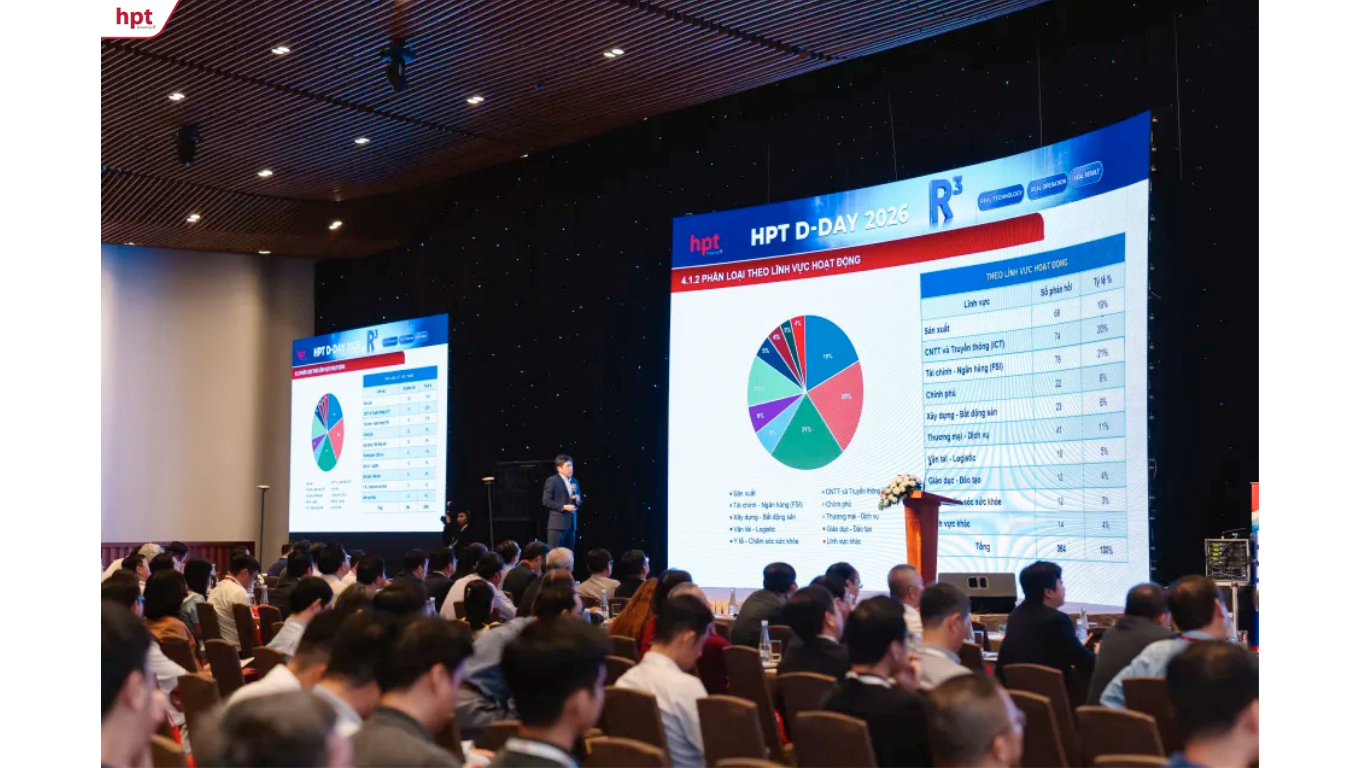
The survey attracted participation from organizations across a range of industries
Compared with the 2025 edition, the 2026 survey has expanded both its scope and analytical depth, moving from a focus on documenting the current landscape to a systematic assessment of AI capabilities and maturity. The assessment framework has been refined around five capability domains, the questionnaire has been expanded, and the scoring methodology, level classification criteria, and assessment thresholds have been more rigorously standardized. Additional layers of analysis have also been introduced to clarify the relationship between AI capabilities, implementation progress, and value creation. As a result, the survey goes beyond answering “How is the market adopting AI?” to help each organization determine:
“Where does our organization stand on the AI maturity journey and what should we prioritize next?”
78.6% of organizations remain at the first two levels of AI maturity
The survey results show that most organizations are still at the early stages of their AI maturity journey. Specifically, 47.8% of organizations were classified at Level 1 – Emerging, while 30.8% were at Level 2 – Developing. This means that 78.6% remain at the first two maturity levels. Meanwhile, 18.4% reached Level 3 – Standardized, and only 3.0% reached Level 4 – Transformative. This distribution indicates that AI is already present in many organizations, but adoption largely remains at the experimentation stage, in isolated implementations, or in the early development of foundational capabilities. Turning individual AI initiatives into an organization-wide capability that is consistently governed, operated, and developed remains uncommon.
The fact that only 3.0% of organizations reached Level 4 highlights that AI-driven transformation involves much more than deploying additional tools or projects. Organizations must integrate AI into their strategy, build scalable technology and data foundations, develop the right workforce capabilities, manage risks, and demonstrate tangible value. Despite the growing accessibility of AI, a significant gap remains between using AI and establishing AI as an organization-wide capability.
Key bottlenecks on the AI maturity journey
The survey indicates that current strengths tend to lie in awareness, strategic direction, and early implementation, while the most notable bottlenecks concern execution and operations.
• In Domain T, the main bottlenecks are deployment, operations, and observability.
• In Domain A, the most significant challenge is the depth and accessibility of specialized AI expertise.
• In Domain R, key bottlenecks include monitoring, incident management, and continuity assurance.
• In Domain V, the main challenge is realizing value and managing benefits.
The rigorous scoring methodology and use of gating criteria highlight the need to develop all five capability domains in a balanced manner. The findings reinforce that AI maturity is a systematic development process: an organization’s overall maturity may be constrained by a weaker capability domain or one that does not meet the minimum requirements.

Overview of the discussion sessionAI maturity is not a race to accumulate technology
One important insight from the survey is that AI maturity should be viewed as a matter of balance, rather than a race to accumulate technology. An organization that invests heavily in technology but lacks risk governance cannot yet be considered mature. Similarly, an organization with a clear strategy but insufficient resources, operational capabilities, or measurement mechanisms may struggle to turn its direction into sustainable results.
Therefore, improving AI maturity requires strengthening all five capability domains of the V-STAR model in parallel. Addressing weaker domains is particularly important to raising the organization’s overall maturity level.
Where are organizations prioritizing AI Adoption?
Over the next 12 months, survey participants are inclined to prioritize AI use cases that can directly improve operational efficiency and management effectiveness in the near term. The focus is on addressing existing business challenges, delivering measurable improvements to day-to-day activities, and enabling faster, better-informed decision-making.
Most organizations tend to prioritize clearly scoped use cases that are relatively straightforward to implement and whose outcomes are easy to observe, before moving on to objectives requiring deeper integration with customer, product, market, and business model data. This pattern is also consistent with the survey sample, which consisted largely of IT-adopting organizations and entities with fewer than 1,000 employees.
Data security and AI ethics are the biggest challenges
In addition to assessing maturity, the survey identified a range of challenges organizations face as they implement and adopt AI.
The most frequently cited challenges were:
• 58% cited data security and AI ethics;
• 52% cited a shortage of AI talent;
• 48% cited costs and the difficulty of determining return on investment (ROI);
• 42% reported limitations in data and infrastructure;
• 30% indicated a lack of strategy or leadership direction within their organization;
• 27% said they were unclear about the applicable legal and regulatory requirements.
These challenges are closely interconnected rather than isolated. A lack of strategy can lead to fragmented investment; limitations in data and infrastructure can undermine solution effectiveness; talent shortages can make implementation and oversight more difficult; and unclear measurement practices can increase pressure around costs and ROI.
Data that is fragmented, poorly standardized, inconsistent in quality, or difficult to connect across systems can also reduce accuracy and limit the ability to operate AI at scale.
To adopt AI effectively and sustainably, organizations therefore need to address these bottlenecks in a coordinated way. Rather than pursuing scattered initiatives, they can start with priority use cases while strengthening capabilities in people, data, risk governance, and value measurement. This creates a foundation for scaling AI safely and effectively over time.
Media coverage of HPT D-DAY 2026
• Vietnam Cybersecurity Magazine: Three Pillars of Enterprise Digital Transformation
• Vietnam Cybersecurity Magazine: Investing in AI Without Overlooking Cybersecurity
• Vietnam Cybersecurity Magazine: Banking Digital Transformation: Security Challenges
• Vietnam Cybersecurity Magazine: Ho Chi Minh City to Integrate AI into Its Digital Citizen Ecosystem from 2027
• Vietnam Cybersecurity Magazine: Putting Taxpayers at the Center of Technology Adoption
• Mot The Gioi Magazine: HPT D-DAY 2026: Moving AI from Experimentation into Real-World Operations
• Green Perspective Blog: HPT D-DAY 2026: Positioning Vietnam and Addressing the Challenge of Meaningful AI Adoption
• VOV Traffic: From Real Technology to Lasting Digital Value and Trust
• VnEconomy: Only 18.4% of Organizations Have Reached the “Standardized” Stage of AI Adoption
• Nhan Dan Online: Strengthening Capabilities to Bring AI into Real-World Operations
• TheLEADER.vn: HPT D-DAY 2026: Connecting Technology with Practical Value
• Investment & Development: 78.6% of Organizations Remain in the Early Stages of AI Adoption
• Ho Chi Minh City Online Information Portal: Strengthening Capabilities to Bring Artificial Intelligence (AI) into Real-World Operations
• Vietnam.vn: Strengthening Capabilities to Bring Artificial Intelligence (AI) into Real-World Operations
• Quality and Life Magazine: HPT D-DAY 2026: Moving AI from Experimentation into Real-World Operations
• HTV9 Television Channel: HPT D-DAY 2026: Bringing Real Technology into Operations and Building Sustainable Digital Trust
• The Gioi So: A Secure Data Foundation: Key to Turning AI Adoption into Business Value
• Nhip Song Online: HPT D-DAY 2026 Forum: Leaders and Businesses Explore Ways to Move Artificial Intelligence (AI) Beyond Experimentation
• TechSignin: HPT D-DAY 2026: Advancing the Use of AI and Technology in Business Operations
• Nhip Song Sai Gon: Explore New Technology Experiences at HPT D-DAY 2026
• 24h: Explore New Technology Experiences at HPT D-DAY 2026