Accordingly, 2025 is regarded as a pivotal year, as compliance requirements extend beyond the completion of documentation or administrative procedures to demand substantive changes in data governance practices and technology system design. For organizations in the power sector, where operational data and personal data are closely intertwined with the delivery of essential services, these requirements are especially critical.
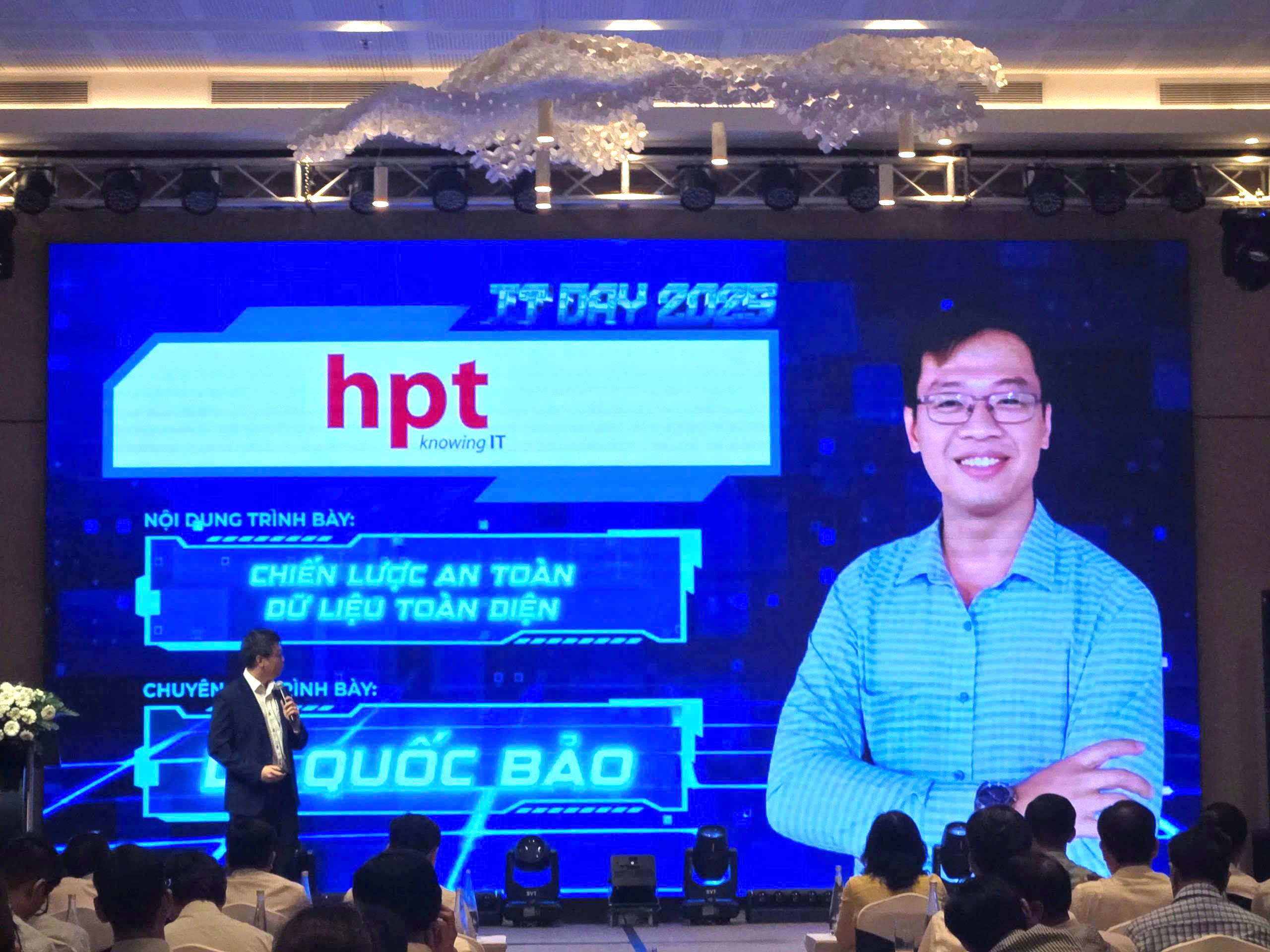 Mr. Le Quoc Bao, Deputy General Director of the HSE Center, presenting at the conference.
A key highlight of the presentation was HPT’s holistic approach to compliance, integrating legal and technological dimensions in parallel. From a legal perspective, the presentation clarified the responsibilities of data controllers and data processors, requirements for conducting Data Protection Impact Assessments (DPIA), and the role of data protection personnel under the new regulatory framework. These requirements were structured into clear roadmaps and practical checklists, enabling organizations to easily reference and implement them in real-world operations.
From a technology standpoint, HPT analyzed a multi-layered security architecture, focusing on critical layers such as databases, applications, users, and privileged accounts. The presentation also identified prominent risk scenarios emerging alongside the rapid adoption of artificial intelligence, including ransomware attacks targeting databases, data leakage via APIs, supply chain attacks, and increasingly sophisticated impersonation and deepfake threats.
In addition, HPT provided an in-depth analysis of the information security risk landscape in 2025, drawing on data and trends related to data breaches in Vietnam and globally. These insights underscored that data security is no longer a standalone technical challenge, but a strategic risk management issue, particularly for smart urban infrastructure systems.
With a well-prepared presentation, clear arguments, and a strong focus on practical realities, HPT delivered valuable expert insights at IT Day 2025. The session was highly appreciated by attendees for its applicability and its ability to provide concrete implementation directions for organizations in the power sector, especially in bridging new legal requirements with appropriate technology solutions. This approach enables organizations to better envision a structured, secure, and sustainable digital foundation amid digital transformation and the era of artificial intelligence.