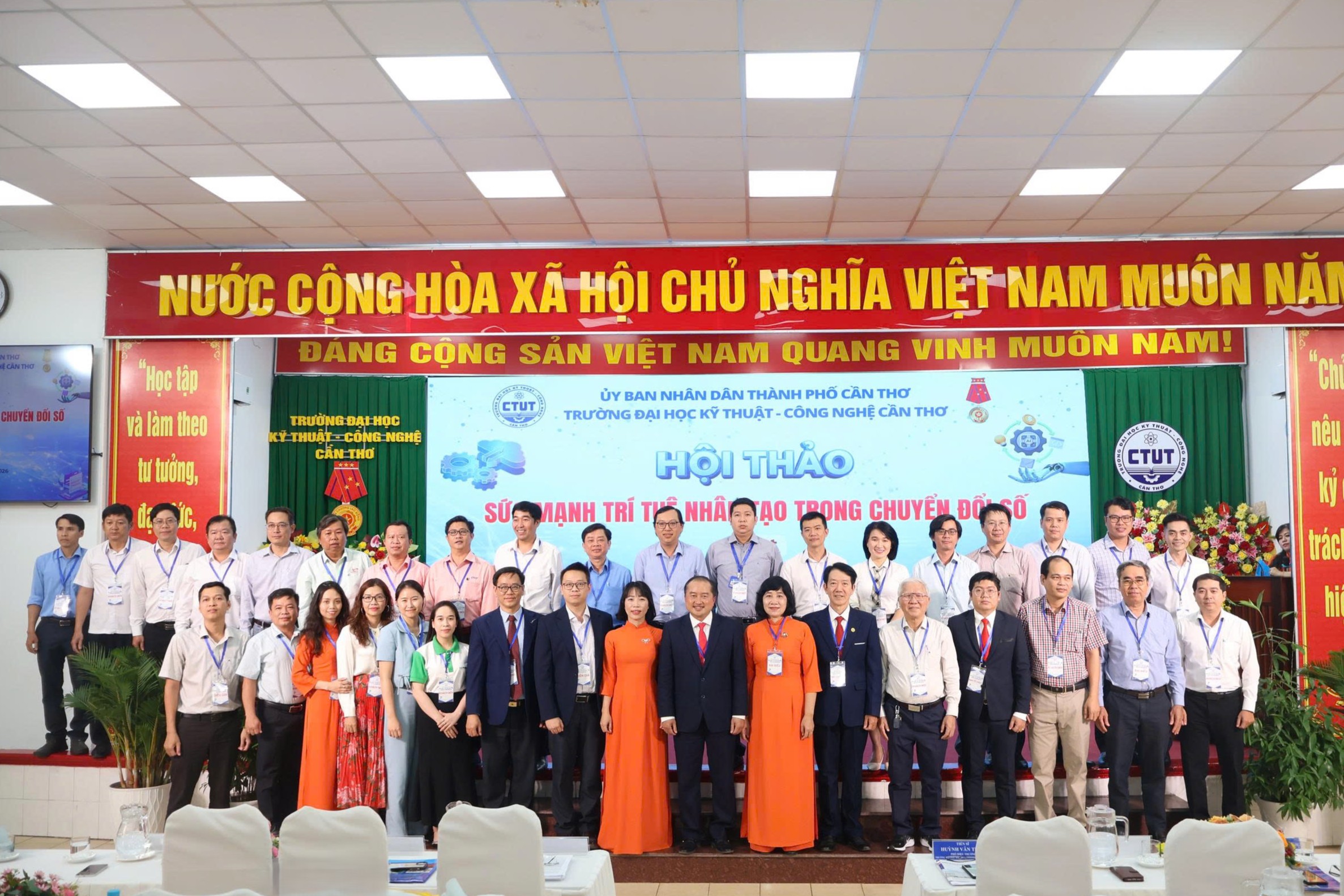
 Conference participants
According to HPT experts, the rapid growth in the volume of security alerts, along with the increasing sophistication of cyber threats, has clearly exposed the limitations of traditional Security Operations Center (SOC) models that rely heavily on manual processes. High false-positive rates often place SOC teams under significant pressure, prolong detection and response times, and increase the risk of overlooking critical security incidents.
Drawing from practical implementation experience across multiple organizations and enterprises, HPT emphasized that integrating artificial intelligence into SOC operations has become an inevitable requirement for modern cybersecurity, rather than merely a technology pilot or experimental initiative.
At the conference, HPT specialist introduced the AI Assistant for SOC - an intelligent assistant directly integrated into the Cybersecurity Operations Center platform. The solution supports SOC analysts throughout the entire incident response lifecycle, from alert intake and analysis to response actions.
Specifically, the AI Assistant is capable of automatically normalizing and enriching alert data from multiple sources; performing analysis and contextualization; assessing severity levels, prioritizing incidents, and recommending appropriate response actions. For high-confidence threats, the system can automatically execute initial containment measures while maintaining a human-in-the-loop mechanism, ensuring that SOC experts retain oversight and final decision-making authority.
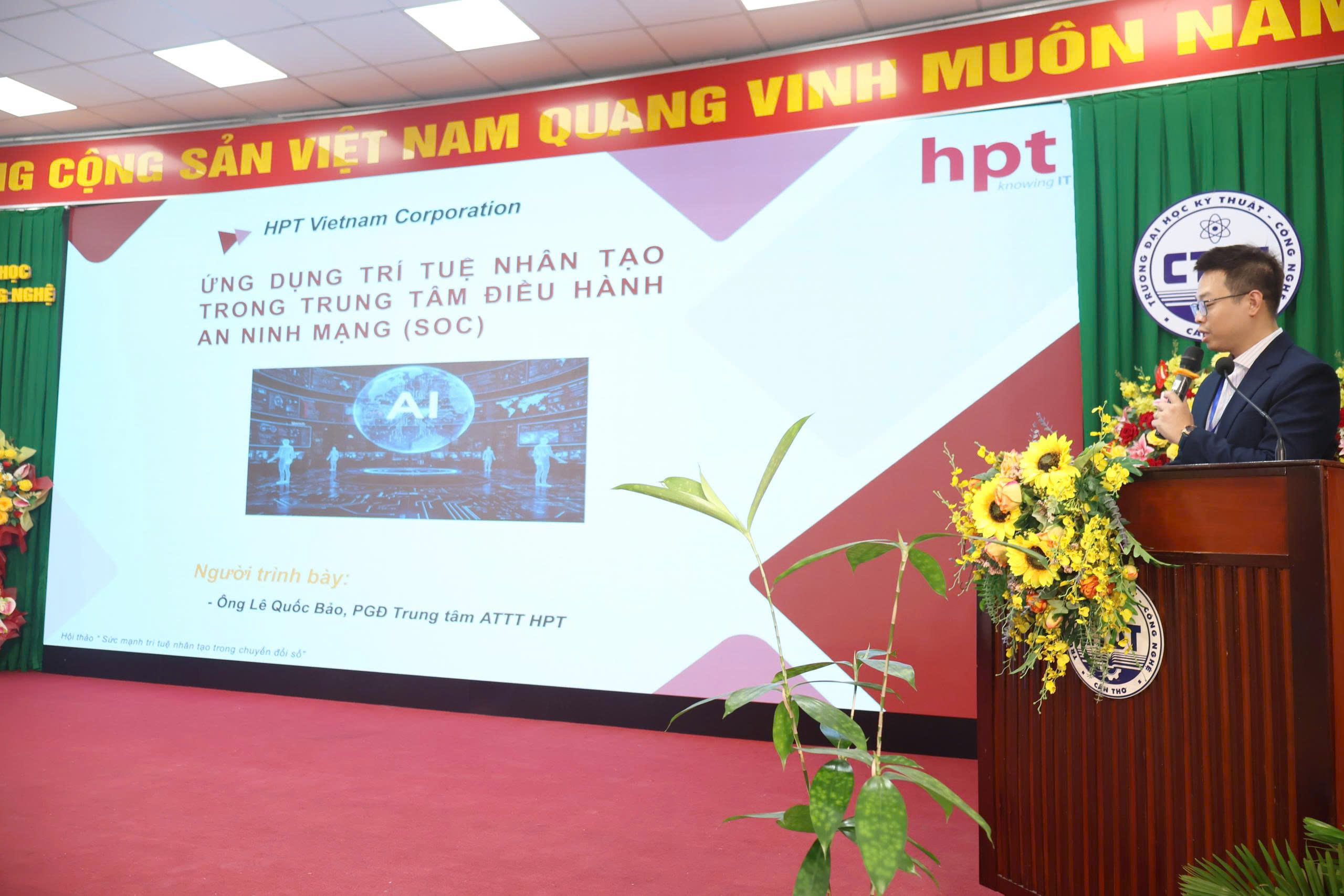
Mr. Le Quoc Bao – Vice Director of the HPT Cyber Security Center, delivering a presentation.
One of the highlights of the conference was the application of foundational AI technologies such as Generative AI, Retrieval-Augmented Generation (RAG), AI Agents, and the Model Context Protocol (MCP) in SOC operations. According to HPT experts, this combination significantly shortens incident detection and response times, while enabling SOCs to transition from a passive defense model to a proactive approach based on behavioral analysis, risk forecasting, and early attack prevention.
In addition, HPT shared practical experience in applying AI to leaked data analysis—a complex challenge due to the unstructured, fragmented nature of such data and the high likelihood of oversight. The integration of AI with traditional analytical techniques helps improve data reliability, reduce errors, and support enterprises in strengthening cyber security governance.
Mr. Le Quoc Bao, representing HPT, receives a token of appreciation from the university.
From a programmatic perspective, the Organizing Committee noted that artificial intelligence is increasingly becoming a foundational technology with far-reaching impacts across multiple sectors, including education, manufacturing, enterprise management, and cybersecurity. The conference was organized to provide a platform for both academic and practical exchange, enabling stakeholders to recognize the critical role of AI in creating value for the digital economy, while openly discussing challenges related to infrastructure, data, human resources, and technology ethics.
The Organizing Committee received 18 presentations with strong scientific value and high applicability from universities, research institutes, government agencies, and technology enterprises. The submissions focused on topics such as large language models (LLMs), generative AI, automation, and AI applications in specialized domains, with cybersecurity emerging as a notable focal area.
The conference attracted strong interest from lecturers, researchers, students, regulators, and enterprise representatives
Within the program framework, shared by HPT expert provided practical perspective from a technology enterprise, demonstrating how AI is being applied to enhance SOC operational efficiency. These applications help organizations and businesses strengthen their cybersecurity defense capabilities in the digital era.