HPT SmartTrak is an image data platform developed by HPT, utilizing AI Computer Vision
to convert data from cameras into searchable information, metrics, alerts, and connectivity,
serving security, safety, operation, compliance, and analytics on a unified platform.
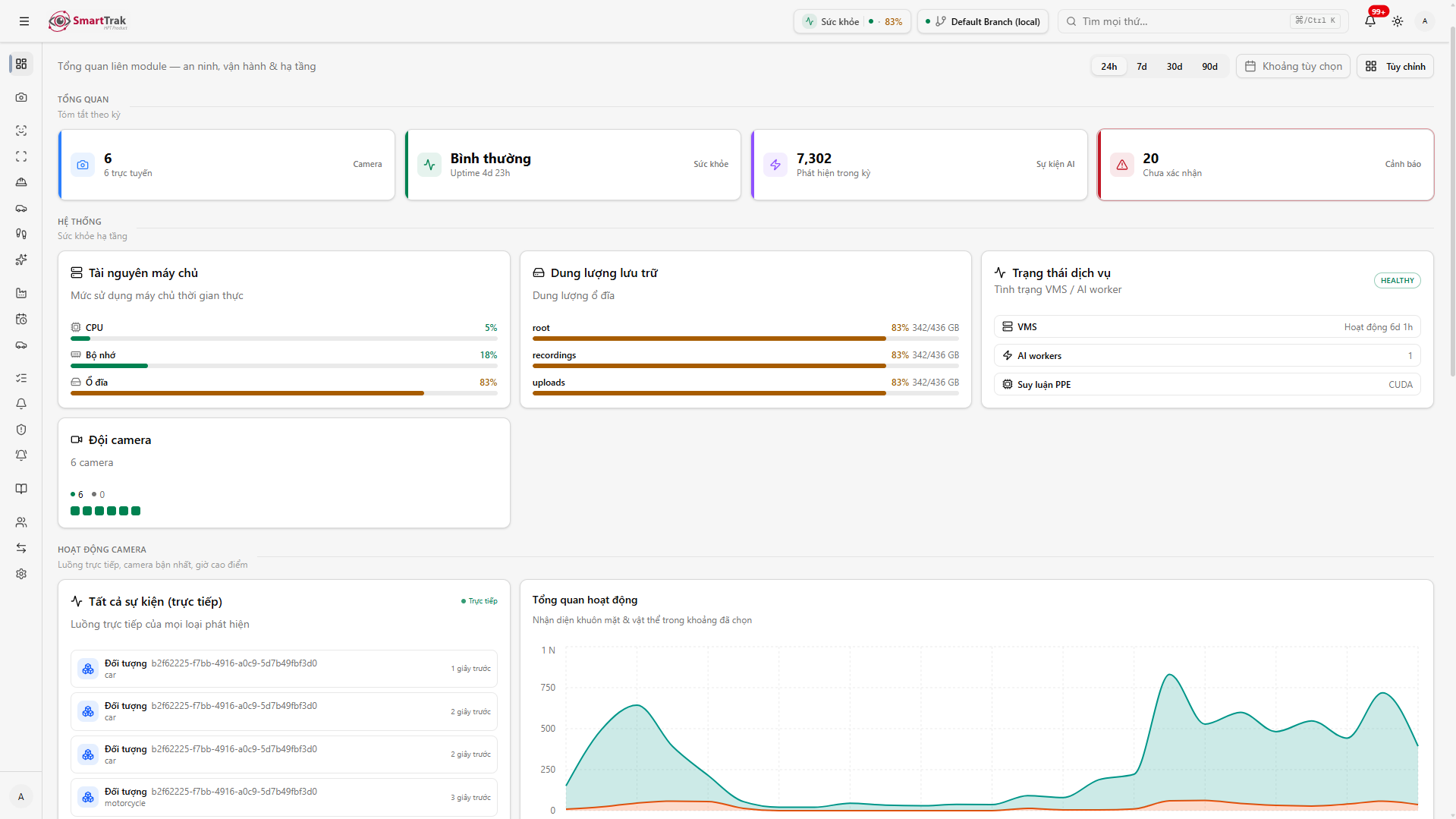 Overview interface of HPT SmartTrak
Businesses record continuously 24/7 but fail to extract effective insights
2,400 hoursof video daily if 100 cameras are recording continuously
Most video data is never viewed, never analyzed, does not show up in reports, and is typically only retrieved after an incident occurs.
While ERPs can look up orders, HRMs can check attendance, and BMS can monitor equipment status, video data from cameras primarily exists in unstructured video format.
As systems expand across multiple sites, stages, and device brands, the gap between the volume of collected data and the actionable information extracted only widens.
Find specific events
Reduce the review time when searching for the right moment amid thousands of hours of recordings.
Transform images into metrics
Utilize camera data for statistics, reporting, and decision support processes.
Consolidate data
Manage multiple locations, camera brands, and investment stages on one platform.
Detection and Alerting
Assist in detecting incidents as they occur and send alerts to the appropriate processing team.
Data Management
Control access rights, action history, and scope of data as required by governance.
This is not about buying more cameras; it’s about data:
the mountain of image data that already exists needs to be structured so it can be searched,
measured, and connected to the rest of the enterprise.
From passive recording devices to an image data platform
HPT SmartTrak employs AI Computer Vision to convert video streams into structured data.
Each event captured by the camera becomes a record tagged with time, location, type of entity,
and corresponding identification attributes.
From that data layer, businesses can mine for multiple purposes:
security, safety, operations, compliance, and analytics, all on a unified platform instead of investing
in multiple disparate systems for each need.
On a unified interface, SmartTrak integrates the video management system (VMS) with an AI Vision analytics layer:
live viewing and playback, search for events by conditions, object recognition and tracking,
vehicle plate management, operational data statistics, setting up alert rules,
and connecting data to other business systems.
Searchable image data
The key differentiator of SmartTrak is not just being able to store more videos,
but in the ability to transform videos into searchable, measurable, and shareable data between systems.
Data Structuring at the Source
SmartTrak extracts each event into independent records consisting of timestamps, camera, area,
type of entity, identification records, and vehicle plate numbers.
Conditional Retrieval
Users can search by time period, camera group, event type, and specific entities,
instead of manually fast-forwarding through video.
Linking Data Across Cameras
Multiple appearances of a person across different cameras are aggregated by time order
to assist in reconstructing the movement path.
Search Using Natural Language
Users can input free-text descriptions in Vietnamese, and the system returns relevant events
from the cameras along with timestamps and related images.
a person wearing a red outfit riding a black motorbike at the main gate
Consolidate Multiple Locations and Camera Brands
Cameras installed over various stages and from multiple suppliers at different branches
are brought together to a unified data layer.
Data Source for Digital Ecosystems
SmartTrak provides APIs and webhooks to share events for control out to,
BMS, ERP, alert systems, or internal reporting platforms.
Illustration of Natural Language Search
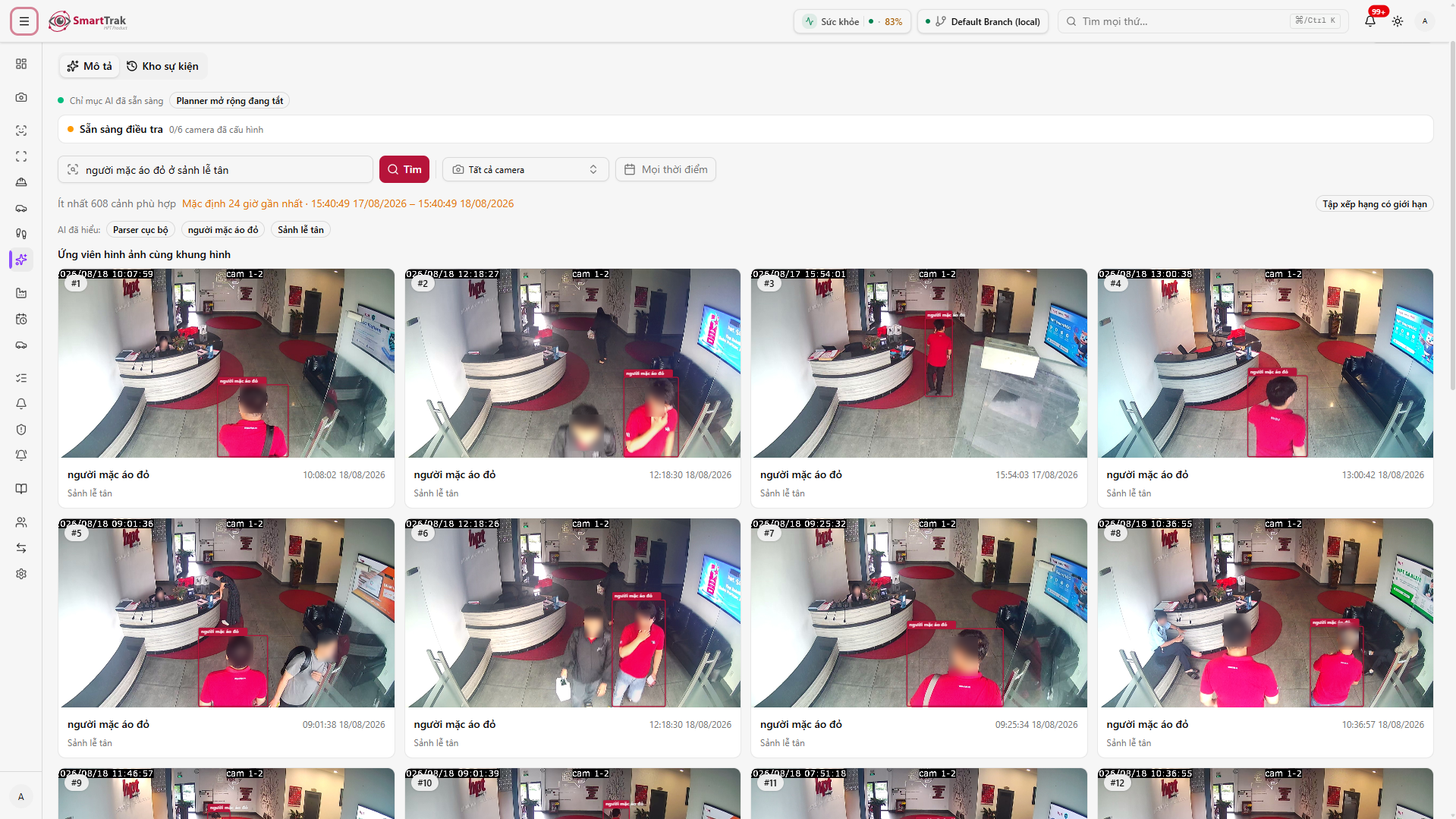 Illustration of the natural language search interface
Image data supporting decision-making
SmartTrak's analytics module aggregates structured event data into metrics
over time, area, and entity type, helping businesses integrate image data
into monitoring processes and into decision-making.
Over time
Aggregate by hour, day, week, and month to identify peak hours and unusual fluctuations.
By area and camera
Compare event densities among monitored locations to determine priority intervention points.
By vehicles
Compile entry and exit counts by plate number, time range, and list of authorized vehicles.
By People Flow
Count people entering and exiting by area and show concentration density when appropriate modules are deployed.
By Alerts
Track quantities, types, and areas generating alerts to help refine operational rules.
Aggregate Reporting
Display metrics in chart formats and detailed tables, facilitating report export and automated distribution on schedule.
A single data layer serving multiple departments
Management BoardAggregate events and alerts by location and reporting period.
SecurityDistribute events by area and timeframe to assist with resource allocation.
Operations and AdministrationVehicle entry and exit counts by time and plate number.
Employee SafetyFrequency of events per monitored zone, already configured.
Business and RetailHeadcount data and heat maps by area when appropriate modules are deployed.
IT DepartmentExport reports and send events via API, webhook into common reporting systems.
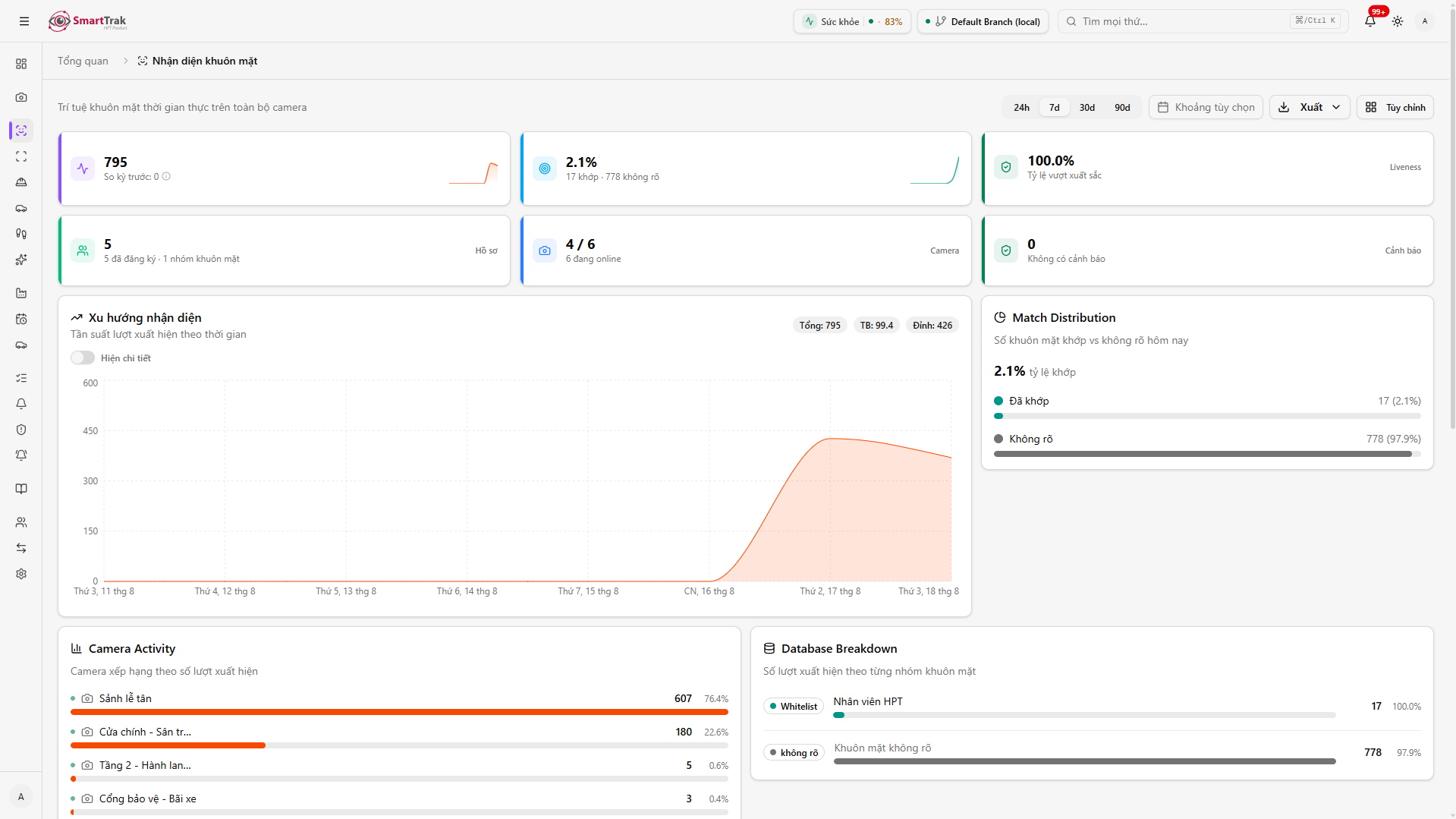 Dashboard of statistics and reporting in HPT SmartTrak
Integration with IoT, RTLS, and other operational systems
In most organizations, cameras are not the only data source. IoT sensors,
RTLS (Real-Time Location Systems), access control, BMS, and other operational systems
capture different pieces of information of the same operational activities.
SmartTrak is designed to merge these data layers, providing image data with contextual support
for information from sensors, location data, and operational systems.
BMS
Access Control
HPT
SmartTrak
RTLS
Barrier / Parking
IoT
ERP / Reporting
Some real-world applications already deployed
Barrier and Gate Control
Assist in opening barriers when plates and facial recognition are on the permitted list and still valid.
Access Control
Synchronize validation events with camera images at the same door and at the same time.
RTLS Ontrak
Cross-reference the position of location tags with camera images by area and time.
Warning Lights and Alarm Speakers
Trigger alerts based on alert rules to convey information to the appropriate area on-site.
Data exchange methods
- Push events in real-time through webhooks when there are alerts, identification results, or recorded license plates.
- Allow other systems to query data through APIs to retrieve event information, statistical metrics, or camera status.
- Receive signals from external devices and systems to trigger actions based on integration scenarios.
- Synchronize business data such as personnel records or authorized vehicle lists as per project scope.
Image data governance and protection of personal data
SmartTrak offers tools to help businesses control access,
monitor actions, manage login sessions, and the lifecycle of data,
while prioritizing an on-premise deployment model on customer-controlled infrastructure.